

A Big Bold Beautiful Journey

I went into A Big Bold Beautiful Journey (2025), recently made available on Netflix, with absolutely no sense of the storyline. Sometimes that’s the best way to encounter a film. With no expectations to manage and no trailer logic to undo, you’re free to simply watch and see what happens. What I found was a fantasy-based romantic comedy that takes itself rather seriously at times, moves at its own pace, and ends up having more to say than I expected. I recommend it.
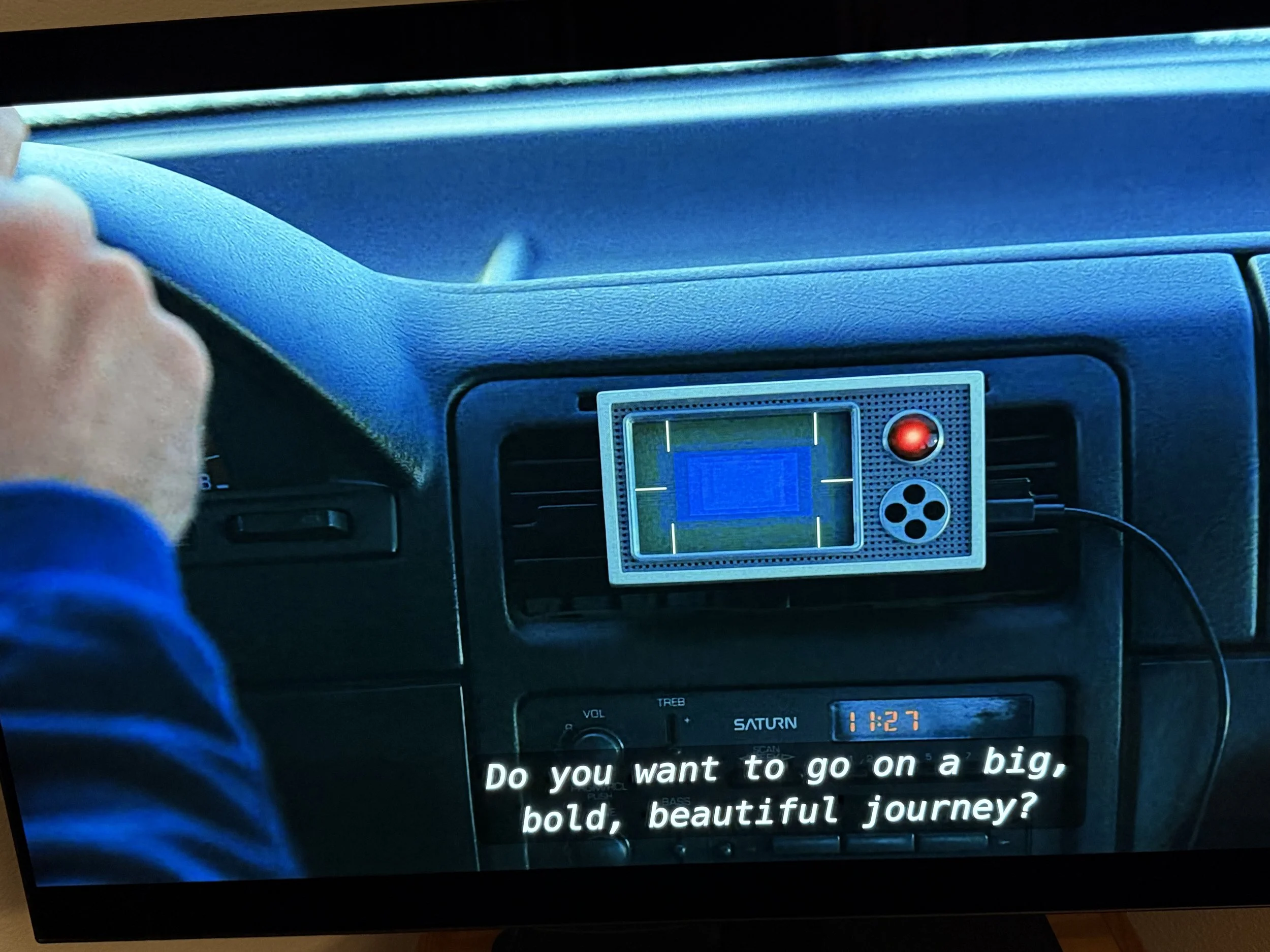
The film opens at a generically named “Car Rental Agency,” where David (Colin Farrell) encounters two unusually quirky employees, Kevin Kline as the Mechanic and Phoebe Waller-Bridge as the Cashier. David is on his way to a friend’s wedding. The car he rents, a 1994 Saturn SL, comes equipped with a GPS unit that quickly establishes itself as a character in the story.
At the wedding, David locks eyes with Sarah (Margot Robbie), and the two engage in flirtatious, slightly offbeat banter at the reception. At one point, Sarah semi-seriously asks David to marry her, a moment that clearly unsettles him. What is he to make of this unconventional woman? When Sarah then asks him to dance, he declines. Later, she leaves with another man.
Driving home, the GPS asks David if he’d like to go on a big, bold, beautiful journey. He agrees, and with that, the film’s fantasy premise is underway. David is soon instructed to take the next exit and order a fast-food cheeseburger. Inside the restaurant, he discovers Sarah, also eating a cheeseburger. When they leave, Sarah’s car, another Saturn from the same rental company, refuses to start, and David’s GPS instructs him to offer her a ride. She accepts, and the two begin sharing the rest of the drive home.
From there, the film settles into its central rhythm. The GPS directs David and Sarah to a series of roadside stops that turn out to be doors, both literal and metaphorical. Behind each door lies not so much a place as a moment in time. These episodes are drawn from the characters’ pasts, and what’s striking is how matter-of-factly they accept what’s happening. There is only a modicum of astonishment. David and Sarah step into these moments as if the past were still physically present, waiting to be revisited.
One door, for example, takes them to David’s high school on the night he is starring in the class musical, How to Succeed in Business Without Really Trying. He plays the lead role of J. Pierrepont Finch, with Sarah and his parents watching from the audience. During the show, David relives a painful romantic rejection, confessing his feelings to a costar offstage and then, in an impulsive moment, temporarily derailing the production by confronting her onstage with blunt observations about the life she will go on to lead.
In a later scene, they stop at a decaying roadside billboard with an opening that leads into a café. Inside, two conversations unfold at once. David’s former fiancée presses him for an explanation about the end of their engagement, while Sarah revisits the collapse of a relationship with a former boyfriend. Eventually, the two conversations merge, with all four characters seated at the same table. David and Sarah are given an unusually revealing view of how each has behaved in earlier relationships, and both are forced to acknowledge their own intimacy issues.
By this point, it’s very clear that this big, bold, beautiful journey is less about time travel than about self-examination. As David and Sarah move through these episodes together, the focus remains on how they respond to what they learn about one another. They watch. They ask important questions. They engage in remarkable amounts of self-disclosure. The film allows these moments to unfold slowly. The pace worked for me, though I can see why others might find it trying. This is not a movie in a hurry.
What the film seems most interested in is not whether David and Sarah will end up together, but what it means for two people to really see one another. By the time you’ve lived a while, introductions are never clean. Everyone arrives with baggage, earlier versions of themselves still visible around the edges. A Big Bold Beautiful Journey makes that idea concrete, and in doing so, captures something emotionally recognizable.
I was willing to go along with the unlikely premise and the deliberate pacing largely because the performances are so grounded. The connection between Farrell and Robbie builds through pauses, glances, shared silences and, often, moments of unusually deep honesty. That connection feels earned, not manufactured.
What stayed with me afterward was not a particular scene or line of dialogue, but the film’s underlying suggestion that not every meaningful encounter has to resolve into something permanent. Some meetings matter because they clarify where you are, or because they briefly align two lives that have been moving along separate tracks. That idea resonated with me more than any conventional romantic payoff might have.
Not everyone will be taken with this film. It asks for patience and a tolerance for ambiguity. It treats human connection as something provisional and fragile, shaped by timing and circumstance, and often understood only in retrospect.
By the end, A Big Bold Beautiful Journey felt less like a romance than a meditation on how lives intersect, diverge, and occasionally overlap just long enough to matter. For me, that made the journey worth taking.
Sardines in the Back Bar: My High School Reunion
I graduated from high school in 1965, right in the middle of that turbulent, unforgettable decade. Last month, I made the cross-country trek from Eugene, Oregon to Rice Lake, Wisconsin for my 60-year reunion.

Traveling to rural northern Wisconsin isn’t easy. These days, I take two days just to get there. This time I flew to Minneapolis via Seattle, rented a car, and drove to a nearby hotel in the dark. Car rentals, of course, come with their own set of challenges. I drive a 2020 Subaru Crosstrek at home, so when I found myself behind the wheel of a 2025 Nissan Rogue, I had to pause in the airport lot, dig out the 600-page manual, and acquaint myself with the vehicle’s basics. Eventually, I made it to the airport Holiday Inn Express, tired but in one piece.
Day two was the drive to Rice Lake. I stopped in Menomonie to see my friend “BA,” a classmate I’ve known since I was 12. We’ve been in steady contact — often over Zoom during and since the pandemic — so our conversation flowed easily, even if it wasn’t about anything in particular. Politics and religion are off-limits between us, so our chatter resembled a Seinfeld-style “conversation about nothing.” Still, it was grounding to reconnect before the busy weekend ahead.
On day three, I had breakfast with another classmate, “CJ.” We first reconnected at our 40th reunion and in recent times have grown a bit closer through regular Zoom calls. Our conversations are different from most — personal, probing, unafraid of difficult topics like family dynamics, belonging, and the choices that shaped our lives. Sitting across from her in person gave those exchanges a richness I rarely find elsewhere.
That evening was the first group gathering at a local pizza place. I had gone in with low expectations, and still, the chaotic setup surprised me: thirty or so people crammed into the back corner of a bar with no clear plan for how to mingle or sit together. Consequently, BA and I retreated to a booth for dinner before cautiously rejoining the group once the crowd thinned. To my relief, I found a few familiar faces and even received a warm hug from a female classmate who had been reading my writings over the years. Those small moments of recognition helped balance out the initial frustration.
The next morning, BA and I met again for breakfast, this time joined by “WJ.” Our conversation took a surprising turn when, at one point, he asked, “Do you believe in vaccines?” The question startled me, but to my relief, all three of us agreed. Still, it was a reminder of the cultural divide I often feel when I return to Rice Lake — a blue-leaning visitor navigating a visit to a deeply red part of the country.
Saturday night was the main event at Lehman’s Supper Club, the classic Rice Lake venue for special occasions. Drinks started at five, but I stuck with ginger ale while classmates sipped their cocktails. I chatted briefly with a few people, but the connections felt fleeting. Dinner was buffet-style, serviceable but unremarkable, and I found myself at a table where conversation was scarce. By 7:30, much of the room had emptied out.

There was no program to speak of, aside from WJ’s attempt to spark discussion about future reunions. He floated the idea of meeting every year at Lehman’s. To me, that seemed unrealistic, for how many of us in our late seventies are going to make an annual pilgrimage back to Rice Lake? Still, he made an effort to keep something alive.
The highlight of the night was another chance to talk with CJ, this time in the middle of the busy dining room. While classmates milled about, we found ourselves absorbed in yet another meaningful exchange, the kind that lingers long after the event ends.
Looking back, I left the weekend with mixed feelings. Unlike past reunions where unexpected conversations left me energized, this one felt quieter, thinner, as if the spark had dimmed. Most classmates seemed eager to head home early, and true reconnections were rare. Was it me? Or was it simply the reality of our age, our numbers dwindling, and our capacity for long evenings fading? I honestly don’t know.
One regret lingers: I could have picked up my phone and taken photos. As an old event photographer, I had the skills and opportunity to document the gathering and share it on our class Facebook page. Instead, I sat passively, missing a chance to contribute. That realization stings.
And yet, in the end, the reunion gave me what I’ve come to value most in these years — small moments of closeness with a few old friends. A booth dinner with BA. A searching breakfast with CJ. Even an awkward question from WJ that revealed common ground. Perhaps that’s what reunions are really about: not the big group photos, or the banquet meals, but the quiet exchanges that tend to remind us who we were, and who we’ve now become.
-----
I have written essays about three previous class reunions:
40th reunion: The Class of 65
45th reunion: Social Media & Whatever Happened to the Class of 65
50th reunion: Not As Young As I Once Was
Dear Peter
Peter Yarrow, of Peter, Paul & Mary fame, is currently battling cancer and nearing the end of his days. His daughter, Bethany, has put together a “Peter Yarrow Living Tribute” page online at https://www.peteryarrow.net. (Contributions to this page can be submitted at https://tinyurl.com/y26rfxv2.)
Here is the message I sent to Peter yesterday.
- - - - -
Dear Peter –
We have met on two occasions, but you have meant so much more to me than a couple of brief encounters. Here are just a few thoughts before you go…

In the early morning hours of December 18, 1969, as I was experiencing a relationship trauma, I needed an escape from my current situation, and as I got into my car, the radio came on to the gentle, unmistakable opening chords of “Leaving on a Jet Plane” – “All my bags are packed…” In the ten thousand times I’ve heard that song since, I’ve always been reminded of the strains of Peter, Paul & Mary during that cold winter morning in northern Wisconsin. And how meaningful those John Denver lyrics were for me at that point.
In November of 1988, when I was on a business trip, I went into an art shop in Lexington, Kentucky, and found a poster with a black & white 1964 photo, by John C Desaint, of John, Paul, George & Ringo; Peter, Paul & Mary; and Ed Sullivan (see below). I just had to have it. I gently carried this incredible find back home to Oregon, had the print framed, and it’s been on display in every place I’ve call home since. You were my favorite artists – the Beatles providing the pop, and PP&M the folk - for the soundtrack to my high school and college years.
On February 9, 1991, I attended a Peter, Paul & Mary concert (the only time I saw you together) at the Indiana University Auditorium in Bloomington. This was at the beginning of the first Gulf War. You, personally, invited any of us in attendance to get together with you after the concert to talk about current events, and I was in that very small group who was there. (Of the 3,200 at the concert, only about 20 of us hung around to talk with you.) I’m sure you don’t remember me from this event, but I remember that evening very clearly. Among the topics were the morality of that specific conflict. And all war. You were so very gentle, kind, informed and articulate. Just as I had imagined you.
On May 21, 2019, I was the event photographer at Linda Carroll’s house when you performed as a benefit for your new non-profit. Before dinner, you graciously posed with each of the attendees so that they could have a remembrance of that night. You worked with me via mail and email to personally sign all the prints so that I could then distribute them. You were really great to work with, and even signed multiple prints for me and my date, Gwendolyn. A signed 8x10 hangs in my living room right now; and it always will. I have since been able to brag that Peter Yarrow’s contact info is in my phone.
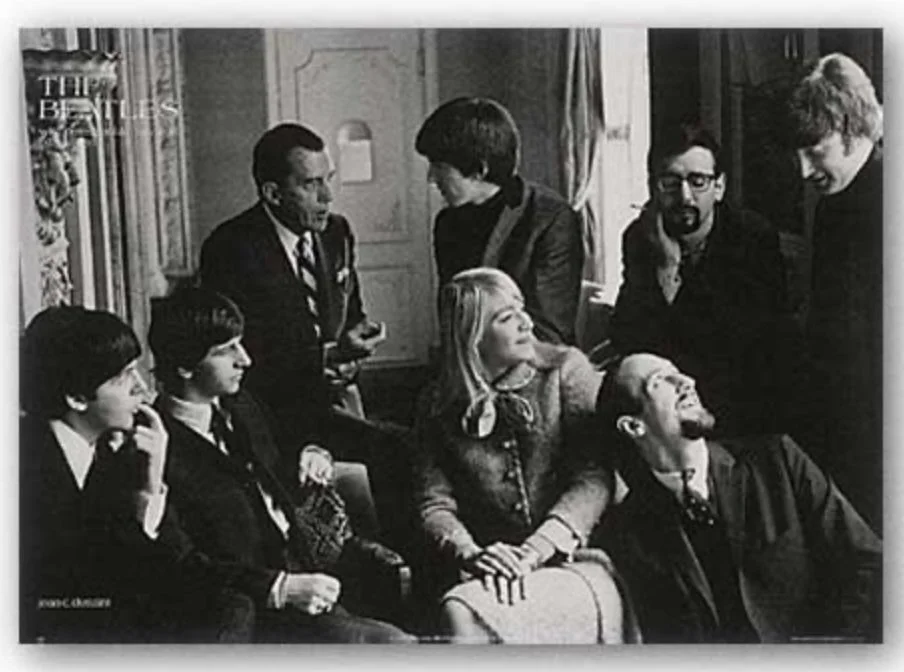
The Beatles; Peter, Paul & Mary; Ed Sullivan - by John C Desaint (1964)
Gwen and I sat in the front row of the folks gathered in Linda and Tim’s living room that night. A special and enduring memory of the occasion happened when you approached Gwen, sitting at the end of the row, and sang most of one verse of “Puff, the Magic Dragon” directly to her.
Peter, you have meant so much to so many. From the bottom of my heart, thank you for living the life you have. I’m glad our paths crossed.
Blessings…
- - - - -
Soundtrack Suggestion
Where have all the flowers gone?
Long time passing
Where have all the flowers gone?
Long time ago
Where have all the flowers gone?
Young girls have picked them, every one
Oh, when will they ever learn?
Oh, when will they ever learn?
(“Where Have All the Flowers Gone” – Pete Seeger)
Update
Sadly, Peter died today, January 7. Here is the New York Times obituary.
What Is It All About?

I am now in my 77th year and quite frequently, in this mostly-retired life I’m living, I wonder how to make the most meaning of my remaining days. I say “mostly retired” because back in 2019, after five years with no earned income, I decided to seek part-time work that would supplement my various and sundry (i.e., relatively-modest) retirement-income streams. So, in the last five years, and because I have a wide range of skills, I have worked three successive, different jobs on our local community college campus. It has been a valuable experience, so far, and keeps both my mind and body active.
Retirement, though, is nothing like I imagined – that is, if I thought about it much at all. I never really did have a coherent “retirement strategy,” as we are encouraged to do. Rather, my approach seemed to be: to work as long as I can and then see where I was in “old age.” You would be right in concluding that this is not really the most prudent game plan. And, as it turned out, I spent a considerable portion of my life pursuing multiple academic degrees, which significantly cut into my ability to put away any kind of really-comfortable, old-age nest egg. (Student loans played a big part in that, I have to admit; I was paying them off until age 66. It seems I missed the whole “forgiveness” scenario by about three decades.)

The bottom line here is: I have found this time of life to be quite problematic. Despite the fact that I am working part time, getting up in the morning and finding purpose has been a real issue. Questions such as: what am I doing with my life? and what have I done with my life” keep seeping into my consciousness. I keep wondering about the value I have added to the universe during my younger years, and I am especially questioning the value of my life now. As always, I am asking: what’s it all about?
Most people would say: love. But it seems that has mostly passed me by this time around.
Soundtrack Suggestion
What’s it all about Alfie
Is it just for the moment we live
I believe in love, Alfie
Without true love we just exist, Alfie
Until you find the love you’ve missed
You’re nothing, Alfie
(“Alfie” – Burt Bacharach)
Adieu
Teller was not so much bereft as he was stunned; although, he admitted, this was accompanied by a healthy dose of relief. He was aware that he should be grieving, as would be normal under such circumstances. Perhaps the immense sense of fatigue that he was feeling, down to the core of his being, was a symptom of his sadness.

The relationship that he had been involved in for five years was now officially over. Given that he had invested so much of his life in this one person, it qualified as one of the major liaisons of his life. But now, it was, finally: kaput.
Not that this should be a big surprise. In fact, anyone with a lick of sense would have predicted this outcome for a coupling with such a turbulent and chaotic dynamic. The on-again/off-again nature had been truly maddening.
Teller and Gwendolyn had met online and had their first date on her 65th birthday in 2019. He was 71 at the time and hoping to meet his last love. However, despite their mutual attraction, from very early on differences over fundamental values were evident.
Consequently, there were oh many instances of painful conflict along the way. And it did not end well, with Gwen sending a final, distancing text: “… and please do not contact me again.”
Yes, Teller was stunned. And yet, bound to honor Gwendolyn’s wish.
Adieu: perhaps to his last love.
